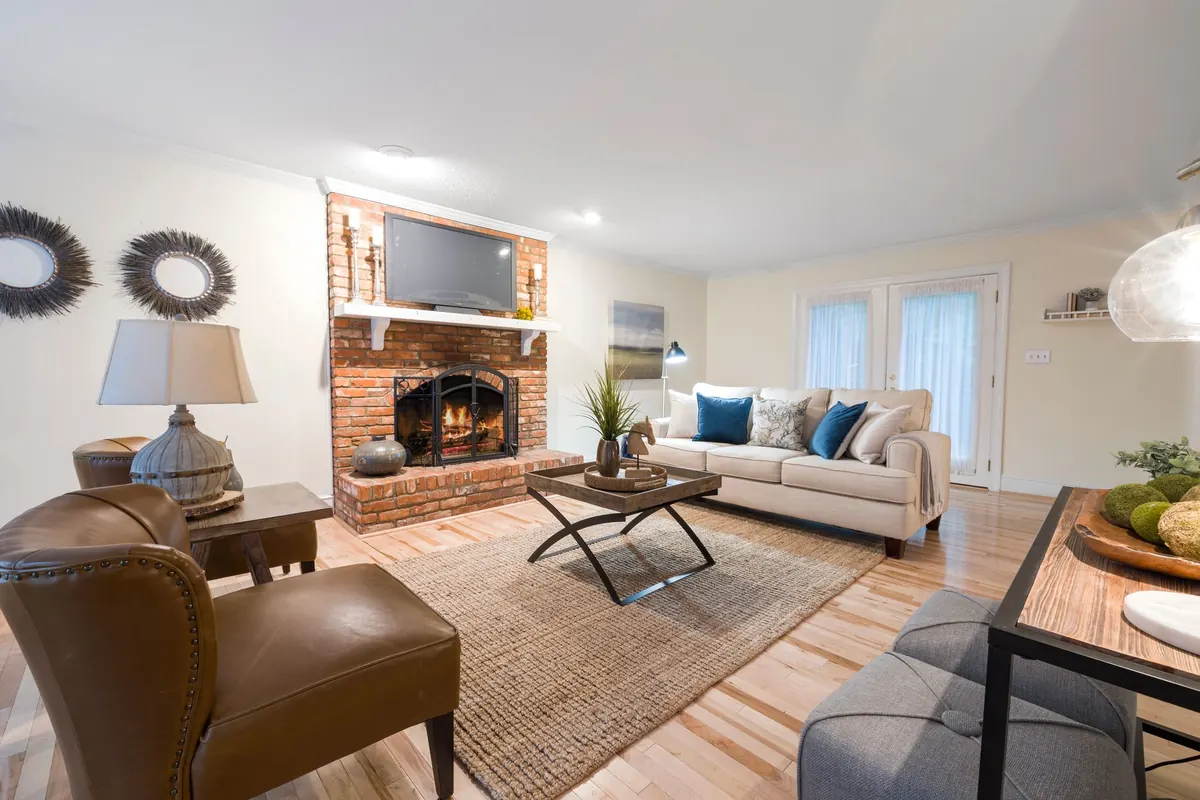
Choosing a fireplace is not like choosing a sofa. A sofa arrives, gets sat on, and that is that. A fire needs fuel, a flue or an opening, an output that suits the room, and a permanent change to your wall or chimney breast. Get the fuel type right and everything else — the surround, the running costs, the paperwork — falls into place. Get it wrong and you can fall for an appliance that cannot legally or practically be fitted in your home.
Four fuels dominate UK homes: gas, electric, wood (including multi-fuel stoves) and bioethanol. Here is how they compare on heat, cost and installation, so you can narrow the field before you start browsing showrooms.
Before you compare models, answer three questions about the space itself.
Heat output matters more than most buyers expect. As a rough guide, many installers work on about 1 kW of output for every 14 cubic metres of space in a reasonably insulated room, so a typical 4m x 4m living room might need somewhere near 2.5 to 3 kW. That is a starting point only — a proper heat calculation accounts for insulation, glazing, ceiling height and draughts. Oversizing a stove is a common and uncomfortable mistake; you end up opening windows in January.
Gas gives you a genuine flame, instant heat and a remote control. Balanced-flue models draw air from outside and vent through an external wall, so they work without a chimney. Conventional-flue models use an existing chimney or a new flue run. Flueless gas fires exist too, but they rely on catalytic conversion and strict room-size and ventilation rules, so treat them as a specialist choice rather than an easy shortcut.
Installation is not a DIY job. Gas work in the UK must be carried out by a Gas Safe registered engineer, and the flue terminal has to sit the correct distance from windows, air bricks, doors and boundaries. Expect an annual service to keep it safe and efficient. Running costs depend on your tariff, but gas generally works out cheaper per unit of heat than electricity.
No flue, no chimney, no fuel deliveries. An electric fire can go in a flat, a converted loft, a bedroom, or a chimney breast that was bricked up decades ago. Modern flame effects have improved enormously — LED ribbon flames, glowing log sets, even crackle sound — but quality varies wildly between budget and premium models, so see one switched on before you commit.
All the electricity an electric fire uses becomes heat in the room, but electricity typically costs more per unit than gas. Most models offer 1 kW and 2 kW heat settings, and many can run as flame-effect only with the heater off, which is ideal for summer evenings.
Many larger models simply plug into a 13-amp socket. Higher-output or built-in versions may need a dedicated circuit, so ask an electrician before you cut into a wall. There is no annual servicing requirement, which keeps ownership simple.
Nothing else looks or feels quite like a real fire, and a modern stove is far more effective than an open grate — an open fire sends much of its heat straight up the chimney, while a closed stove radiates it into the room. Multi-fuel versions also burn smokeless fuels, which is useful if you cannot always get dry wood.
This is the option with the most rules attached:
Budget for chimney sweeping, ash disposal and somewhere dry to store a decent stack of logs. If you are unsure about any of the above, speak to a registered installer or your local authority's building control team before ordering.
Bioethanol burns cleanly enough that no chimney is required, which makes it the most flexible option for rented flats, listed buildings and rooms where running a flue is impossible. You get a real flame in a wall-mounted, freestanding or even tabletop unit, and installation is often no more than fixing it to the wall.
The trade-offs are heat and running cost. Output is modest — often around 2 to 3 kW at full flame on a full-size model — and fuel bought in small bottles works out expensive per hour, so these suit atmosphere and occasional top-up heat rather than primary heating. Burning also releases water vapour and carbon dioxide, so follow the manufacturer's minimum room size and ventilation guidance, never refuel a hot or lit burner, and keep flames clear of curtains and soft furnishings. Store fuel out of reach of children.
Before you order anything, sit in the room at night with the lights off and picture where the fire will go. If the only sensible spot is currently occupied by the television, you have a layout decision to make before you have a fuel to choose.
Price the whole job, not just the appliance. A surround, hearth, flue liner, installation labour and any building notice fee can add up to a substantial sum, and it is worth getting two or three quotes in writing before committing. Ask each installer what is included, who handles certification, and how long the work will take.
Order fuel or arrange a gas connection before the cold arrives, not after. If you are buying wood, buy it in spring for burning the following winter. And if your home is rented or leasehold, check with your landlord, freeholder or insurer before any flue or wall work begins — some policies and leases have specific conditions about solid fuel and open flames. For anything involving gas, solid fuel or building regulations, use a registered installer and seek professional advice rather than relying on a forum thread.
Get those foundations right and the fun part — choosing a surround, a hearth and a flame you actually enjoy looking at — becomes straightforward.
Photo: Curtis Adams / Pexels
Smoke control areas cover much of urban Britain. Here's how to check your postcode, which fuels are authorised, and...
Wet wood wastes heat and lines your flue with tar. Here's how to split, stack and test firewood so it burns hot,...
A practical guide to fire guards, log baskets, ash caddies, tools and hearth rugs — how to choose kit that keeps...

Your cozy guide to fireplaces and hearth living.
