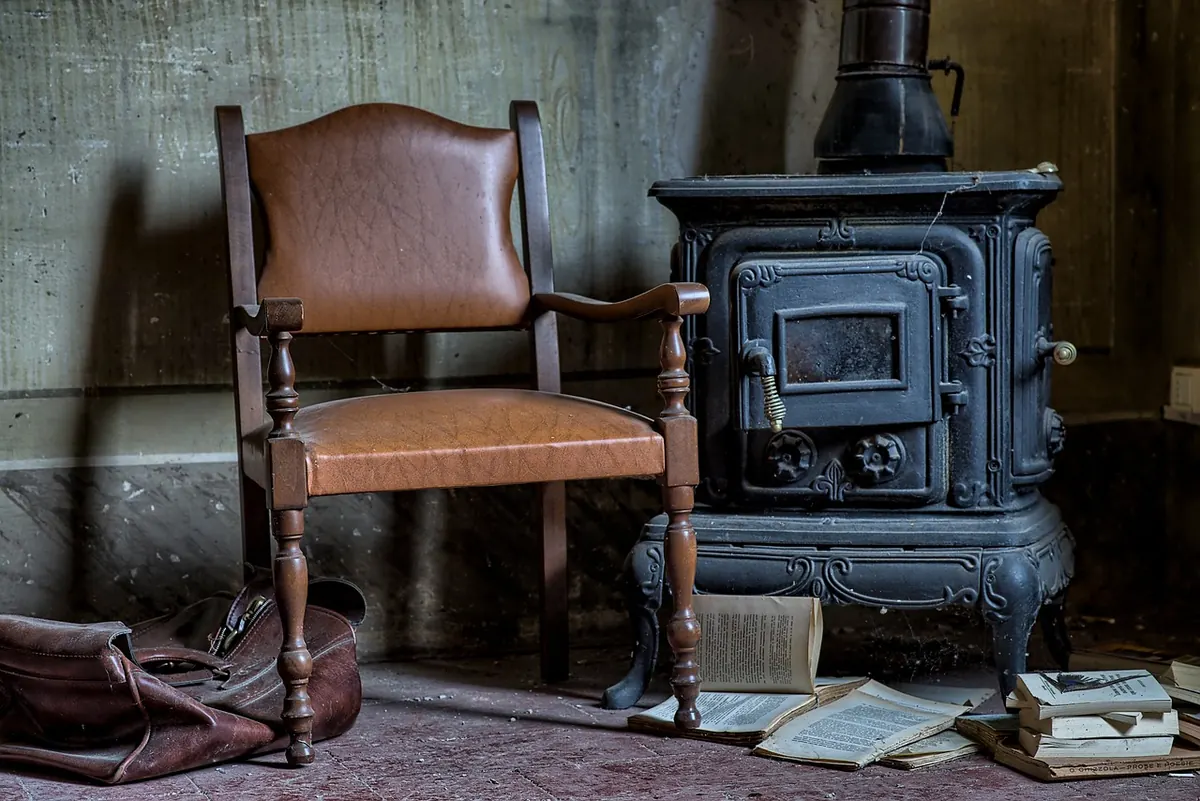
An open fire is one of the oldest comforts in a British home: the grate, the poker, the smell of apple wood catching on a cold evening. A wood stove offers the same pleasure in a sealed box that works much harder. Both burn logs, both need a chimney, and both change how a room feels in January. Where they part company is in how much heat actually reaches you, what it costs to fit them, and what the rules allow.
An open fire is generous with its warmth — to the sky. Most of the energy in your logs leaves up the chimney, and a fair amount of the warm air already in the room is pulled out with it by the draught the fire creates. A typical open grate turns something in the region of 15–20% of the fuel's energy into heat you can feel.
A modern stove flips that around. The firebox is sealed, the air supply is controlled, and secondary combustion burns off gases that would otherwise vanish up the flue. New stoves sold in the UK have to meet Ecodesign standards, and most run at roughly 70–80% efficiency. That gap is not academic: to get the same warmth from an open fire, you will get through several times as much wood.
There is a comfort effect too. A stove pushes heat into the room by radiation and convection for as long as it is burning. An open fire mainly warms the air around the hearth, and only while you are sitting in front of it feeding it.
An open fire burns fast and hungry: a couple of logs give a bright blaze for an hour or so, then it is back to the log basket. It suits a room you use in the evening, or a house where the fire is a treat rather than the main heat source.
A stove is a slow, controllable burn. You load it, let it catch, then close the vents down and it will tick over for hours. Fill it before bed and there may still be embers in the morning to rake and refuel. That steady output is why a stove can take the chill off a whole room — sometimes the hallway beyond it — while an open fire only ever heats the hearth rug.
Size matters more than people expect. A stove that is too big for the room gets run with the vents almost shut, which makes it smoke, soots up the glass and wastes fuel. Work out the rough heat demand of the room and look at a stove's rated output range, not just its maximum.
Neither job is a weekend DIY project, but they are different in scale.
Use a HETAS-registered installer where you can: they can self-certify the work for building regulations, which saves a separate building control application. Whoever you choose, ask for a chimney survey before you commit. A flue that has only ever served a lazy open fire may never have been lined, and old joints leak.
A stove almost always costs more upfront — the appliance, the liner, the hearth, the fitting and any building work add up quickly. An open fire, if the chimney is already sound, can be brought back into service for a modest amount. Get two or three quotes for each route and make sure the flue is included; a cheap quote that quietly omits the liner is not a comparison.
Over time the picture shifts. Because a stove needs far less wood for the same heat, the fuel bill usually falls, along with the number of times you have to order and stack logs. Against that, budget for an annual sweep, eventual liner replacement, and wood that is properly seasoned or kiln-dried — under 20% moisture, so it gives off heat rather than steam.
An open fire is architecture. It fills a chimney breast with flickering light and sound, and nothing beats the ritual of poking it back into life. A stove is furniture as much as heating: a good one sits on the hearth like a piece of cast iron sculpture, behind a glass door that stays clear if you burn dry wood and run it hot.
The trade
Photo: StockSnap / Pixabay
Smoke control areas cover much of urban Britain. Here's how to check your postcode, which fuels are authorised, and...
Wet wood wastes heat and lines your flue with tar. Here's how to split, stack and test firewood so it burns hot,...
A practical guide to fire guards, log baskets, ash caddies, tools and hearth rugs — how to choose kit that keeps...

Your cozy guide to fireplaces and hearth living.
